










The gravel road swallowed the dust of my parents' station wagon, and just like that, the rest of the world ceased to exist.
For two weeks in July, there were no television schedules, no stretched curly phone cords in the kitchen, and no concrete under your sneakers. Just a pair of mildewed canvas duffels dragged up the warped wooden steps of Cabin 4, where the air smelled permanently of damp pine needles, warm plywood, and fifty years of carved initials.
Time didn't run on clocks out there; it ran on the rusted iron bell hanging outside the mess hall.
Morning was the cold shock of lake water before the mist even burned off the dock, and the clatter of aluminum canoes being hauled down the bank. Afternoon was a pocketknife whittling away at a piece of fallen birch, the thwack of a crooked fiberglass bow at the archery range, and the badge of honor that came with scraped shins and a permanent cloud of DEET.
Nobody cared who you were back in town. Out past the telephone poles, currency was measured in flat skipping stones, braided plastic lanyards, and whether you had the nerve to swim out to the floating raft when the water looked like poured asphalt.
I found my old wooden camp trunk buried in the back of the garage last week. Right at the bottom, wedged beneath a petrified pine cone and a compass with a cracked bezel, was an old canteen strap and a faded felt patch.
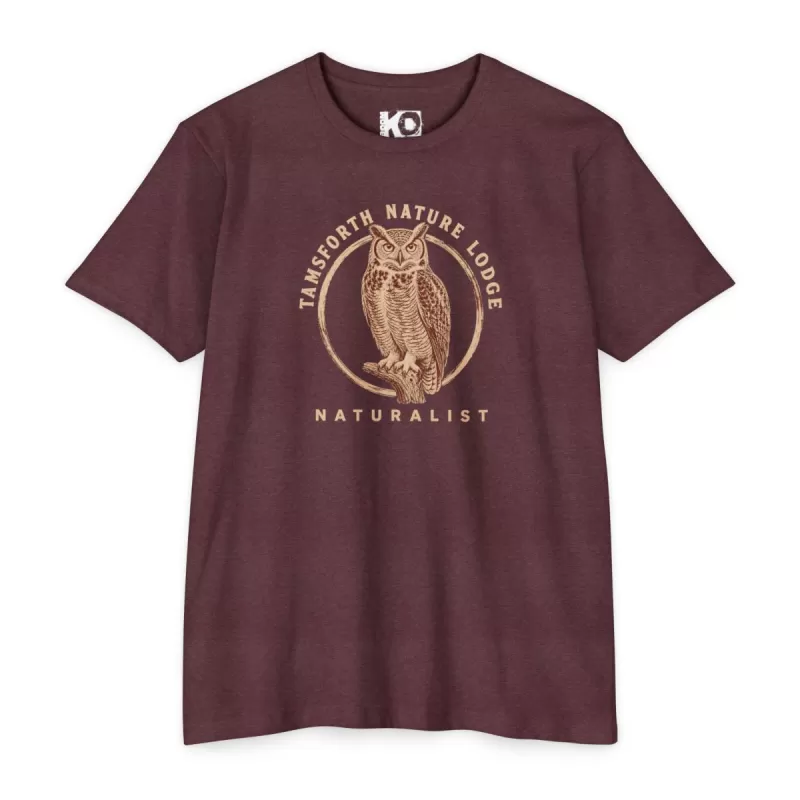
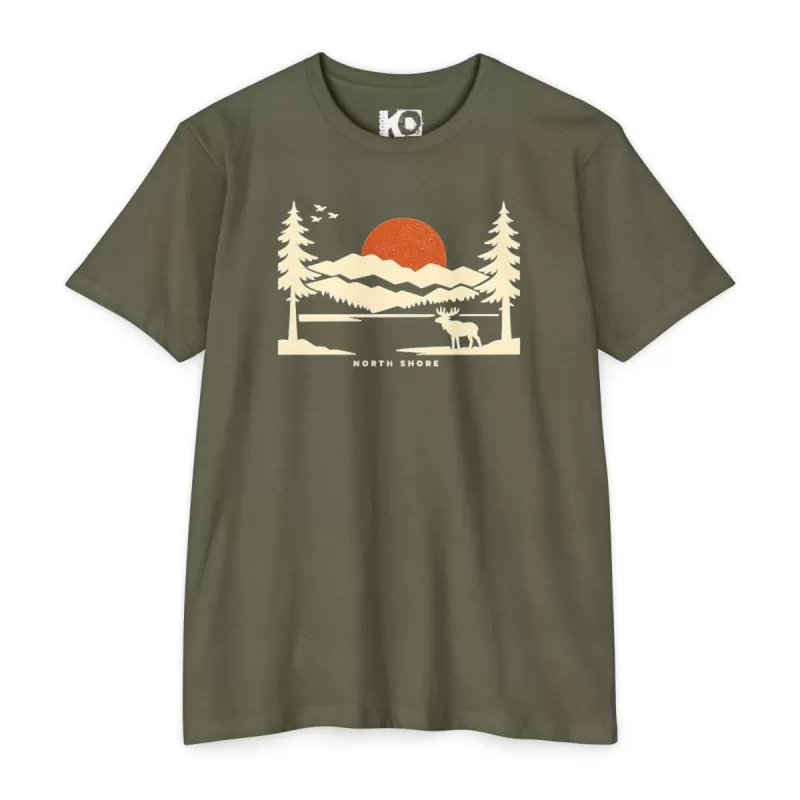
I didn't reach for a computer. I grabbed a chewed-up carpenter's pencil and started sketching right onto the inside lid of a shoebox—chasing that exact, sun-bleached Northwoods geometry: arched athletic block type, honest woodcut hemlocks, and the weathered emblems of lakeside outposts that time forgot to pave over.
We brought those timberline memories back to the shop and burned the screens on thick, heavyweight ring-spun cotton. Cut loose enough for paddling against the wind, and broken-in soft like it already survived three summers at the bottom of your footlocker.
Leave the pavement behind. Wear the pines.